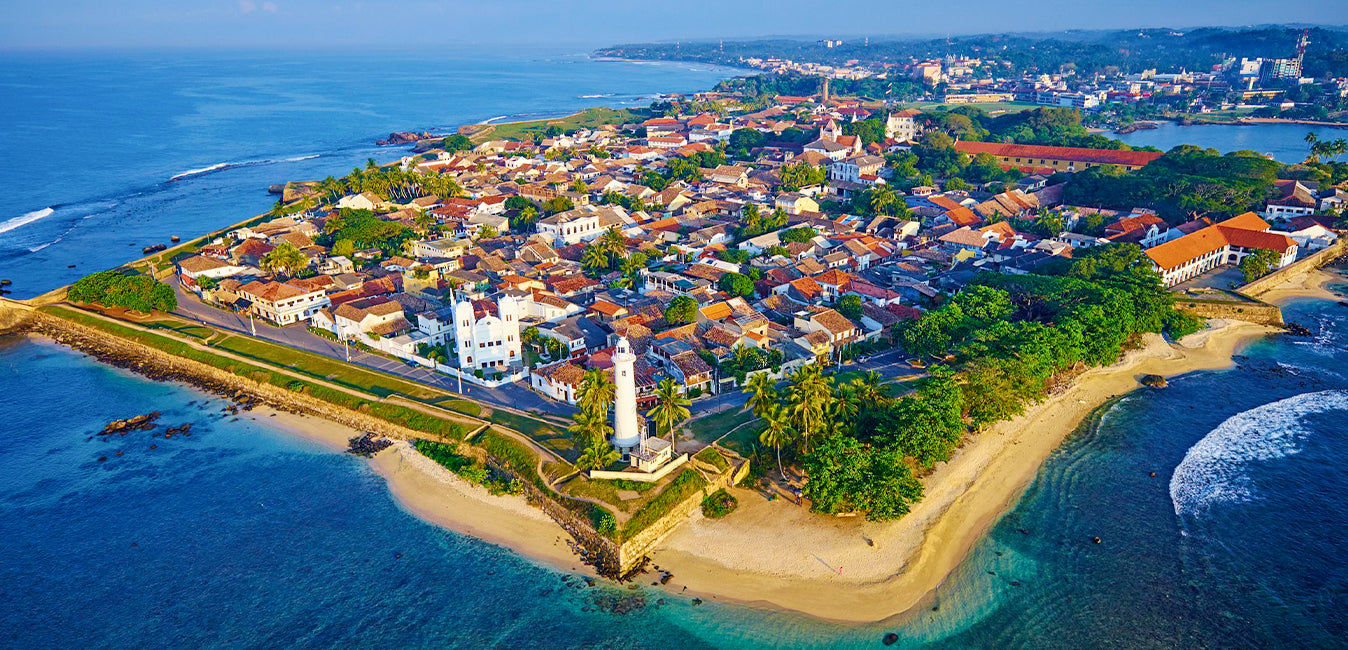
Galle, eine bezaubernde Küstenstadt in Sri Lanka, blickt auf eine reiche Geschichte und lebendige Kultur zurück. Das ikonische Holländische Fort, ein UNESCO-Weltkulturerbe, zeugt vom kolonialen Einfluss. Entdecken Sie unberührte Strände, tauchen Sie ein in kulturelle Feste und genießen Sie die lokale Küche inmitten des altweltlichen Charmes von Galle.
Church Street in Galle Fort, Sri Lanka, is one of the most historically rich and well-preserved areas in the fort. Lined with colonial-era buildings, it reflects the architectural legacy of the Portuguese, Dutch, and British who once ruled the area. The street's name comes from its proximity to All Saints' Church, a key landmark that tourists can explore.
As tourists walk down Church Street, they can immerse themselves in the colonial atmosphere created by the Dutch-style houses and British-era buildings that line the road. Many of these structures have been beautifully restored and repurposed into boutique hotels, cafes, and art galleries, offering visitors a unique blend of history and modern comfort. The vibrant storefronts, antique shops, and quirky boutiques invite tourists to stop and browse for local handicrafts, jewelry, and artworks.
One of the main attractions on Church Street is All Saints' Church, an Anglican church built in the late 19th century. Its Gothic Revival architecture and stained-glass windows make it a must-see for visitors interested in colonial history and architecture. The church stands as a testament to the British influence in the area and remains an active place of worship.
Visitors can also stop at the Dutch Reformed Church, another significant landmark on Church Street. Built in 1755, this church is one of the oldest Protestant churches in Sri Lanka and reflects the Dutch architectural style with its simple yet elegant design.
The street's central location within Galle Fort makes it a perfect starting point for exploring nearby attractions, such as the Galle Lighthouse and the Galle Fort Ramparts. Whether you're interested in history, architecture, or simply enjoying the charming ambiance, Church Street offers a blend of experiences that transport visitors back in time while providing modern comforts.
Über den Distrikt Galle Galle ist eine Stadt an der Südwestspitze Sri Lankas, 119 km von Colombo entfernt. Galle ist das beste Beispiel einer befestigten Stadt, die von Europäern in Süd- und Südostasien erbaut wurde und die Wechselwirkung zwischen europäischen Architekturstilen und südasiatischen Traditionen veranschaulicht. Das Fort von Galle ist Weltkulturerbe und die größte erhaltene Festung in Asien, die von europäischen Besatzern errichtet wurde. Galle ist für sri-lankische Verhältnisse eine recht große Stadt mit 91.000 Einwohnern, von denen die Mehrheit der singhalesischen Ethnie angehört. Es gibt auch eine große Minderheit der Sri-Lanka-Moor, insbesondere im Festungsbereich, die von arabischen Händlern abstammt, die sich im alten Hafen von Galle niederließen. Über die Südprovinz Die Südprovinz Sri Lankas ist ein kleines geografisches Gebiet, das aus den Distrikten Galle, Matara und Hambantota besteht. Subsistenzlandwirtschaft und Fischerei sind die Haupteinnahmequellen für die große Mehrheit der Bevölkerung dieser Region. Zu den bedeutenden Sehenswürdigkeiten der Südprovinz zählen die Wildtierreservate der Nationalparks Yala und Udawalawe, die heilige Stadt Kataragama sowie die antiken Städte Tissamaharama, Kirinda und Galle. (Obwohl Galle eine alte Stadt ist, ist fast nichts aus der Zeit vor der portugiesischen Invasion erhalten geblieben.) Während der portugiesischen Herrschaft lebten zwei berühmte singhalesische Dichter, Andare aus Dickwella und Gajaman Nona aus Denipitiya im Distrikt Matara, die Gedichte über den einfachen Mann verfassten.