
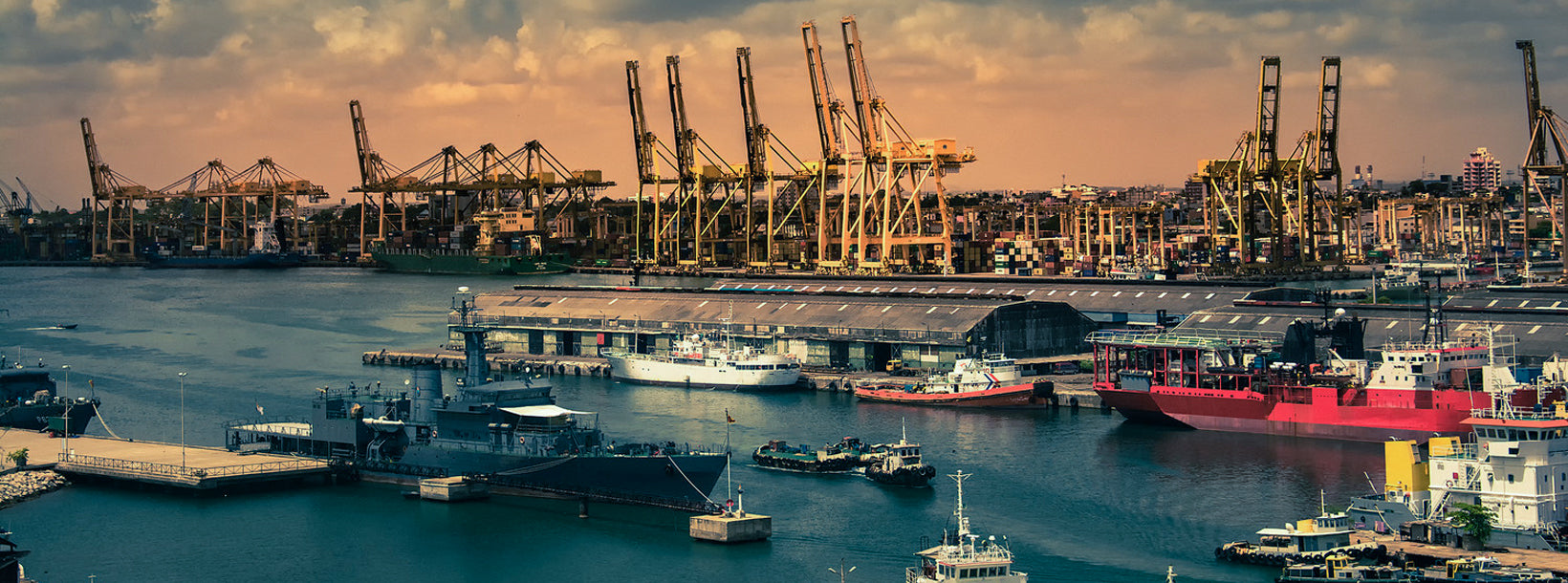
Colombo Port Cruise Terminal


The Colombo Port Cruise Terminal is a modern facility catering to international cruise liners. Located in the heart of Colombo, it offers seamless access to the city's attractions, luxury services, and convenient transport options. The terminal ensures a comfortable experience for both passengers and crew with excellent amenities.
Colombo Port Overview
- Rapidly growing maritime hub in the South Asia Region.
- Convenient and efficient connection for cargo originating from and destined to Europe, East and South Asia, the Persian Gulf, and East Africa.
- Handles about 5.1 million TEU of containerized cargo (2015).
- Original port area: 184 hectares; South Harbour area: 285 hectares (developed in 2008).
- Harbour served by a two-way channel with a depth of 20m and width of 570m.
- Three new terminals planned in South Harbour, each with a capacity of 2.4 million TEU.
- The first terminal in the South Harbour built and operated by Colombo International Container Terminals Limited (CICT) on a Build-Operate-Transfer (BOT) basis.
Colombo Port - Location
- Latitude: 6.9514° N
- Longitude: 79.8478° E
- UN / LoCode: LKTRR
- Time Zone: UTC +5.30
- Time from:
- London (GMT) +5.30 hours
- New York (EST) +9.30 hours
- Hong Kong - +2.30 hours
- Tokyo - +3.30 hours
Port Terminals
- Jaya Container Terminal
- East Container Terminal (ECT)
- South Asia Gateway Terminal
- Colombo International Container Terminal (CICT)
- West Container Terminal (WCT)
- Unity Container Terminal
Port Facilities
- Electronic Data Interchange (EDI)
- Bonded Warehousing and Entrepot Trade
- Duty Free Shopping
- Computer Facilities
- Colombo Common Feeder Network
- Tariff Concessions
- Special Facilities
General Cargo Services
- Logistic provider for Sri Lanka Ports Authority offering best-in-class logistics solutions.
- Fosters a disciplined culture of safety, security, and trust.
Services Offered
- MCC Multi-Country Consolidation (MCC)
- Entrepot Trade and Bonding Facilities
- Warehousing
- User Registrations
ISPS Compliance
- Statement of Compliance for Port of Colombo issued under the International Ship and Port Facility Security (ISPS) Code.
- Compliance verified for all cargo handling terminals, ship repair, and ancillary service facilities.
- Applicable to various types of vessels, including:
- Passenger Ships
- Passenger High-Speed Craft
- Cargo High-Speed Craft
- Bulk Carriers
- Oil Tankers
- Gas Carriers
- Mobile Offshore Drilling Units
- Cargo Ships
Contacts - Mahapola Ports & Maritime Academy (MPMA)
- Institute Address: Chief Training Manager, Sri Lanka Ports Authority, Mahapola Ports & Maritime Academy, 507, De La Salle Street, Colombo 15.
- Telephone: +94 11 2522452 / +94 11 2523268 / +94 11 2520973
- Fax: +94 11 2522660
- Email: mpma@slpa.lk
- Website: mpma.slpa.lk
The Colombo Port Cruise Terminal is a state-of-the-art facility strategically located in the heart of Colombo, offering easy access to the city’s vibrant attractions. Designed to accommodate large international cruise liners, the terminal provides high-quality services including baggage handling, customs facilities, and comfortable waiting lounges. Passengers can enjoy efficient transport options to explore the city's cultural sites, shopping areas, and scenic landscapes. With a focus on providing a seamless and memorable experience, the terminal is an essential gateway for cruise tourism in Sri Lanka, combining modern amenities with personalized services for both passengers and crew.


